Download
Why Breaking Iran Apart Would Produce the Most Dangerous State in the Middle East
Shahin Iraninejad | Founder & Principal Strategist, GSSI
28 March 2026 | Day 29 of the Iran-US War
Originally derived from Project Sesame Appendix 2 (June 2025). Updated for active conflict.
This document is a public extract of the GSSI Project Sesame intelligence framework, distributed exclusively through Speevr. It does not constitute professional advice. The full analytical apparatus — including proprietary methodology, scenario modelling, and forward predictions — is available to retainer clients under NDA.
“A policy that aims to break Iran apart is far more likely to produce a radicalised, aggressive, and expansionist state than a collapsed one. The tactical victory of seizing territory in a border region could be the direct cause of a strategic, region-wide conflagration that dwarfs the current conflict.”— Project Sesame, Appendix 2 (June 2025)
A policy that aims to break Iran apart is far more likely to produce a radicalised, aggressive, and expansionist state than a collapsed one.
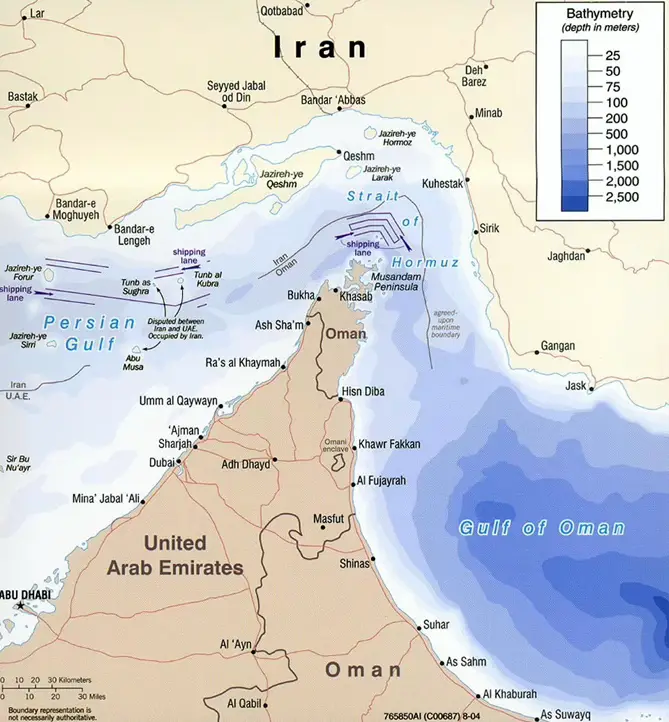
On February 28, the United States and Israel launched a joint strike on Iran that killed Supreme Leader Ali Khamenei, destroyed nuclear facilities, and initiated what is now a multi-front regional war in its fourth week. President Trump has given Iran until April 6 to reopen the Strait of Hormuz or face strikes on its energy infrastructure, including the Kharg Island oil terminal.
Within parts of the Western strategic community, a belief persists that sufficient military pressure will fracture the Iranian state along ethnic and internal fault lines, producing a weakened, contained, and ultimately compliant Iran. Some are actively pursuing this outcome through covert support for separatist proxies in Baluchistan, Kurdistan, and Azerbaijan.
This analysis, first published in June 2025 as part of our Project Sesame intelligence framework, argues that this belief is a grave strategic miscalculation. It was written nine months before the war. Every week since February 28 has reinforced its conclusions. The premise: a “successful” campaign that fragments Iran's territorial integrity would not produce a pliant, weakened state. It would catalyse a violent, bottom-up nationalist radicalisation that transforms the state and the region for the worse.
The premise: a “successful” campaign that fragments Iran’s territorial integrity would not produce a pliant, weakened state. It would catalyse a violent, bottom-up nationalist radicalisation that transforms the state and the region for the worse.
1. The Two-Front Thesis: Why Internal Crisis Hardens, Not Weakens, the War Effort
The conventional assumption is intuitive: a state fighting abroad and facing unrest at home is a state stretched to breaking point. Resources are diverted. Political will fractures. The leadership is paralysed by competing demands. This is the model that informed the decision to exploit Iran's December 2025-January 2026 protest wave as a precursor to military action.
The assumption is wrong for Iran, and the historical record explains why.
Iran's security architecture operates on a principle of force specialisation that is doctrine, not improvisation. The state maintains operationally independent forces for internal security and external power projection. The IRGC Ground Forces, the Basij, and the Law Enforcement Command handle internal suppression. The IRGC Aerospace Force, the IRGC Navy, and the regular military (Artesh) handle external confrontation. The premise of a simple ‘resource drain' between these fronts is a fundamental analytical error. The force that fires missiles at US bases in the Gulf is not the same force that polices protests in Tehran.
More fundamentally, the ‘rally round the flag' effect is not a theoretical concept in the Iranian context. It is a historically validated phenomenon, proven conclusively during the eight-year Iran-Iraq War and reconfirmed during the June 2025 Twelve-Day War with Israel. Direct, unambiguous aggression against the Iranian homeland has consistently unified, not fractured, the populace. The December 2025 protesters who demanded the overthrow of the Islamic Republic were protesting economic failure and government repression. The February 28 strikes gave the state exactly what it needed to reframe its domestic crisis as a foreign invasion, converting a legitimacy deficit into a national survival imperative overnight.
Under these conditions, a simultaneous internal and external crisis does not trigger a ‘crisis of focus'. It triggers the opposite: a fusion of the internal and external doctrines into a single, integrated operation. The retaliatory strike becomes the primary tool for generating the nationalist fervour required to delegitimise and silence internal dissent. Target selection is re-optimised not just for military value but for domestic narrative impact. Escalation itself becomes a political tool. A swarm of drones and missiles broadcast on state television is a far more powerful instrument for domestic consolidation than a covert cyberattack, regardless of the actual damage inflicted. In a two-front crisis, do not expect a hesitant or sub-optimal Iranian response. Expect a precisely optimised, dual-use response that is militarily coherent and politically ruthless. The regime's actions will be designed to use the blood of an external conflict to cauterise an internal wound.
In a two-front crisis, do not expect a hesitant or sub-optimal Iranian response. Expect a precisely optimised, dual-use response that is militarily coherent and politically ruthless. The regime’s actions will be designed to use the blood of an external conflict to cauterise an internal wound.
2. The Myth of the ‘Credibility Trap': Why the Nationalist Card Has Not Expired
A common counterargument holds that the Iranian regime's nationalist card has been played so often it has lost its potency – that the population will eventually see through the manipulation and refuse to rally. The evidence runs in the opposite direction. The notion that Iran might fall into a ‘credibility trap' is a projection of Western logic that fails to withstand the weight of both recent and ancient history.
The 45-year collapse fallacy. For over four decades, a consistent narrative has predicted the imminent collapse of the Islamic Republic, often on a six-month timeline. This perpetual, failed prophecy has paradoxically become a source of strength. Each time the state weathers a crisis 2009, 2019, 2022 it not only proves its own resilience but further discredits the external narratives predicting its demise. For the domestic population, the ‘cry wolf' effect is profound. The promise of external salvation or internal collapse has lost its currency through decades of repetition without result.
The devaluation of economic warfare as a narrative tool. The strategic utility of Western sanctions as a tool for generating popular dissent has severely decayed. The ‘paralysing sanctions' of the Obama era and the ‘maximum pressure' campaign under Trump, while inflicting immense hardship, failed to achieve their stated political goals. In 2026, the weaponisation of sanctions and tariffs against a wide array of global actors—including traditional allies—has stripped the policy of its moralistic veneer. For many Iranians, including regime critics, sanctions are no longer viewed as a targeted tool to punish ‘bad actors' but as a blunt instrument of American foreign policy aimed at suppressing Iran's national and technological advancement.
The unveiling of geopolitical intent. Recent events have provided the Iranian state with powerful, organic evidence to support its long-standing counter-narrative. The unwavering US diplomatic shield for Israeli military operations across the region, coupled with strategic decisions such as the apparent US rehabilitation of the former leader of ISIS in Syria—a figure who once carried a $10 million American bounty—has clarified American geopolitical intentions for a broad spectrum of the Iranian population. This is no longer a message that only regime loyalists accept. It has resonated with a younger, more critical generation who, through unfiltered access to information, increasingly view regional dynamics through a lens of national interest rather than ideological alignment. The veil has dropped, and the space for a pro-Western narrative inside Iran has shrunk dramatically not because of propaganda, but because of observable events.
Deep civilisational context. To view Iran's challenges through the short-term lens of the Islamic Republic's 45-year history is a profound analytical error. Iran is a civilisation-state with millennia of continuity. Societal issues like corruption and bureaucratic dysfunction are not recent phenomena; they are documented pathologies predating the current system by centuries, with roots stretching back to the Sassanid Empire and beyond. This deep historical context fosters a level of societal resilience and, arguably, a cynical tolerance for certain levels of state dysfunction that is often incomprehensible to Western observers. The population's relationship with ‘the state' is a multi-millennial one, far deeper and more complex than its relationship with the specific government of the day.
3. No Exit: Why the Leadership Calculus Is Existential, Not Rational
Western strategic planning frequently models Iranian decision-making as a cost-benefit calculation in which escalating military and economic pain eventually produces policy concessions. This model works when the adversary's leadership has viable alternatives exile, retirement, a negotiated transition. It breaks down completely when the leadership has none.
Iran's senior military and political leadership is composed of individuals who are internationally sanctioned, whose personal and political survival is inextricably fused with the survival of the Islamic Republic. They have no ‘golden parachute.' No second passport. No offshore retirement plan. No foreign government willing to guarantee their safety.
Their decision-making calculus is therefore one of existential necessity, not one of comfort or convenience. This changes every assumption about what level of pain produces concessions. A leadership with no exit will absorb levels of economic and military punishment that seem ‘self-defeating' to an outsider, because in their strategic and historical calculus, it is a necessary investment in the one asset they deem non-negotiable: the survival and sovereignty of the nation-state.
There is no alternative to credibility. For a sanctioned leadership with no exit, deterrence is not one of several policy options; it is the only one. Any perceived weakness, any failure to respond, invites a potentially fatal blow. They will always pay the price to maintain it, because the price of losing it is annihilation.
Do not assume your narrative has traction inside Iran. The perceived hypocrisy and strategic actions of Western powers have severely eroded their credibility as an alternative voice. The regime is now operating in an environment where its anti-imperialist, sovereign-defence narrative is being organically reinforced by external events, even for its critics.
4. The Paradox: What a ‘Victorious' Dismemberment Actually Produces
We arrive at the central argument. The primary blind spot in adversary strategic planning is the failure to model the socio-political consequences of territorial dismemberment on the Iranian national psyche. Conventional wisdom assumes such an event would be a terminal blow, leading to a fractured and contained Iran. Our analysis, based on both regional precedent and a deeper reading of Iranian nationalism, concludes this is a grave and dangerous miscalculation.
A ‘successful' adversary campaign that foments ethnic separatism and results in the loss of Iranian territory would not produce a pliant, weakened state. It is a high-probability catalyst for a violent, bottom-up nationalist radicalisation that would transform the state and the region for the worse. This process would unfold in three predictable phases:
Phase 1: The Popular Mandate for War. The loss of sovereign land—a humiliation not suffered in the modern history of the Republic—would serve as the ultimate, visceral validation of the state's long-standing narrative of foreign encirclement. Public anger would not be directed at the regime for failing to prevent the loss, but at the external enemy and its internal collaborators for causing it. This would create an overwhelming, bottom-up popular demand for retribution and the restoration of national honour, sweeping aside the pragmatic civilian faction and giving the military-security apparatus a popular mandate for war that it currently lacks. Any leader advocating for restraint would be committing political suicide.
Phase 2: The Suspension of Peacetime Logic. Driven by this popular fury, the state would transition to a total war footing. Conventional economic constraints—the primary argument of those inside Iran who advocate restraint and negotiation—would become secondary to the existential imperative of national survival and revenge. The state would be politically empowered to enact extreme measures: asset seizure, rationing, forced industrial conversion to military production. It would accept hyperinflation and economic collapse as necessary costs of war. The logic shifts from ‘Can we afford this?' to ‘We cannot afford not to'.
Phase 3: Compensatory Expansionism. The strategic objective would shift from defence to compensatory conquest. Having lost territory in one area, the national mission backed by a radicalised populace would become the acquisition of strategic depth and resources elsewhere to rebalance the scales. This would not be a continuation of Iran's previous policy of covert influence through proxy networks. It would be an overt military doctrine aimed at regional dominance. Weaker, resource-rich neighbours such as Kuwait or a fractured Iraq become the primary targets for this new expansionist agenda.
This is the paradox at its sharpest. A policy that aims to ‘break Iran apart' is far more likely to produce a radicalised, aggressive, and expansionist state than a collapsed one. The tactical ‘victory' of seizing territory in a border region could be the direct cause of a strategic, region-wide conflagration that dwarfs the current conflict.
5. Why This Matters Now
As of Day 29 of the war, the conditions for this paradox to materialise are accumulating, not receding. Iran has rejected the US 15-point ceasefire plan. Iran's own five conditions—including war reparations, guarantees against future attacks, and sovereignty over the Strait of Hormuz—are non-starters for Washington. The Houthis have entered the war. Israel has launched a ground incursion into southern Lebanon. US troops have been injured at Prince Sultan Air Base. The conflict is expanding on every axis.
President Trump's April 6 deadline for strikes on Iranian energy infrastructure represents the next binary inflection point. If Kharg Island is struck, Iran loses approximately 1.5 million barrels per day of export capacity and its primary source of hard currency. If the separatist strategy in Baluchistan and Kurdistan is simultaneously intensified, the conditions for the three-phase transformation described above move from theoretical to operational.
Expect the suspension of normal economic rationale following a territorial loss. In an existential conflict, do not assume that economic pain will lead to political capitulation. Expect instead a wartime economy where security and military imperatives override all other considerations.
An attack on the soil of this civilisation will be interpreted through the lens of national survival. Prepare for a response that is not just militarily coherent and politically ruthless, but one that is powered by a popular, nationalist fury that most external models fail to account for—especially in the wake of a national humiliation.
Do not mistake a potential loss of territory for a strategic victory. It is the trigger for a new, more dangerous phase of the conflict.
Base your strategy on their reality, not your preferred narrative.
6. What This Analysis Does Not Contain
This article presents the thesis. The operational intelligence behind it—the scenario modelling, the monitoring signals, the institutional mapping, and the forward predictions—is produced daily for GSSI retainer clients through the Project Sesame framework.
Based on the document, here are the improved descriptions of the analytical instruments available under NDA, specifically tailored for the decisions key stakeholders must make in the next 30 days:
The Hormuz Constitution – Seven Post-War Governance Frameworks
How does Hormuz reopen? The full document maps seven scenarios from Helsinki Plus (bilateral Iran-US accord via Oman) to Hormuz Rupture (full closure, Brent past $200). The April 6 deadline determines which branch goes live.
For: energy traders, commodity desks, reinsurance treaty teams, SWF allocation committees
The Shekarkshi Doctrine Targeting Table – Which GCC Assets Are Named
On Day 17, Iran's Armed Forces Spokesman formally stated that any strike on Kharg Island would trigger immediate retaliation against all energy infrastructure of the ‘originating country'. Five GCC assets are explicitly named. The trigger condition has already been crossed.
For: insurance underwriters, GCC infrastructure investors, energy majors with Gulf exposure
The Foreseeability Chronology – 270 Days of Documented Institutional Signal
Every force majeure claim, every D&O liability review, and every insurance non-disclosure dispute arising from this conflict will turn on a single question: was the risk foreseeable when the contract was signed? The chronology maps six watershed dates from June 2025 to February 28, 2026. The strength of any FM argument depends on which side of August 3, 2025 the contract sits.
For: law firms, claims handlers, D&O advisers, arbitration practitioners
The Three-Squeeze Architecture – Why Time Runs in Iran's Direction
Interceptor depletion, Hormuz economic pressure, and US domestic political attrition operate as three mutually reinforcing feedback loops. The compound effect is greater than the sum of the parts. The architecture explains why four simultaneous US supply-side interventions — including the largest SPR release in history — failed to bring Brent below $100.
For: macro PMs, rates and credit strategists, political risk desks
The Scenario Dashboard
Five active scenarios with observable indicators, probability ranges, and positioning triggers. Three predictions are currently running that will resolve within the next 72 hours. The dashboard distinguishes between the world where the war ends in weeks and the world where it becomes a 60-day regional conflagration. The gap between these two is where the edge sits.
For: hedge fund PMs, prop desks, EM research, anyone with a mandate that depends on duration
The Project Sesame framework has tracked the Iran-US-Israel escalation since June 2025. 81 predictions tracked. 73% strict validation. 6 documented clean misses. Lead times from 9 days to 270 days. 290+ analytical reports.
Retainer access includes: all intelligence products (Watch Briefs, Executive Briefings, Macro Desk Notes, scenario dashboards), on-call analyst access during market hours, and quarterly deep-dive briefings.
Contact: desk@globalsouthintel.com | globalsouthintel.com